Key takeaways
- Run generators outside, far from windows, doors and vents.
- Never plug a generator into a wall outlet.
- Let the engine cool before refueling and store fuel safely.
- Use proper cords and keep everything dry.
Carbon monoxide
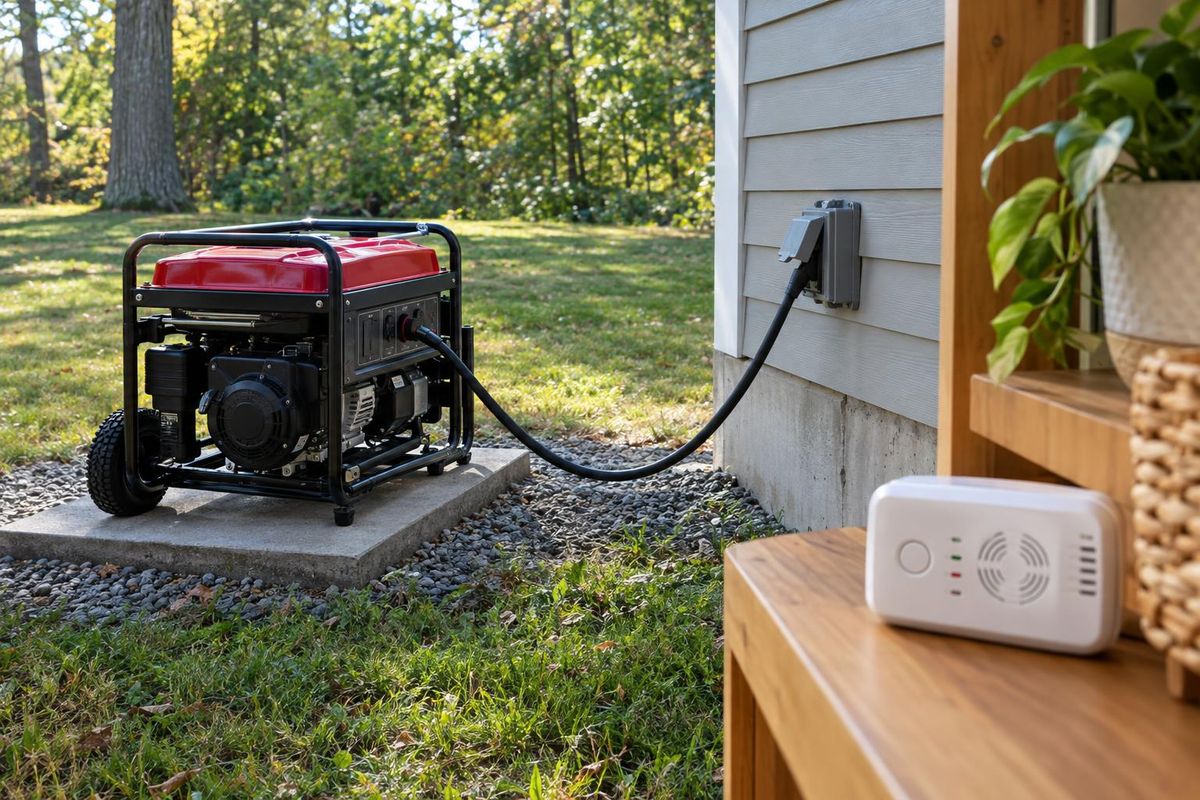
Generator exhaust contains carbon monoxide, a gas you cannot see or smell that can be deadly. Never run a generator in a garage, basement or near an open window, even with the door open.
Place working carbon monoxide alarms in the home and test them.
Backfeed
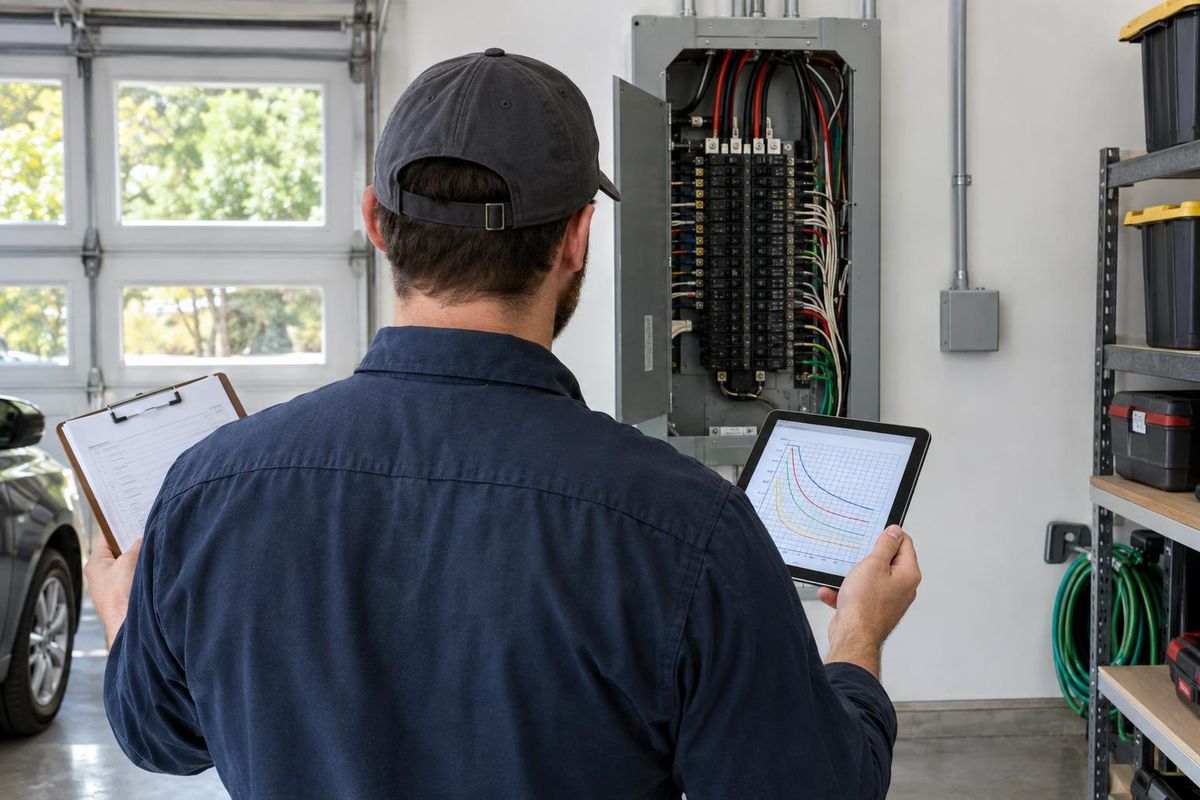
Plugging a generator into a wall outlet sends power back out to the grid, which can injure utility workers and damage equipment. The safe ways to connect are an inlet with an interlock or a transfer switch.
This is one of the most important reasons to have the work done properly.
Fuel and fire
Turn the generator off and let it cool before refueling. Store gasoline in approved containers away from living areas, and keep propane cylinders upright and outdoors.
Keep a fire extinguisher nearby.
Cords and weather
Use heavy-duty outdoor-rated cords sized for the load, and keep connections off wet ground. Protect the generator from rain with a proper cover that allows airflow.
Never run a generator in the rain without protection.
Quick answers
How far from the house should a generator run?
Follow the maker’s instructions and local code. A common rule is well away from windows, doors and vents, and many guidelines say at least twenty feet.
Is a transfer switch required?
It is the safe, standard way to connect to a house. We can explain the options.