Key takeaways
- Check whether the outage is just your home or the whole street.
- Protect food, medicine and warmth first.
- Use generators outside and never plug them into outlets.
- Know who to call if the generator fails.
The first hour
Check the breaker panel and look outside to see whether neighbors have power. Report the outage to your utility and unplug sensitive electronics.
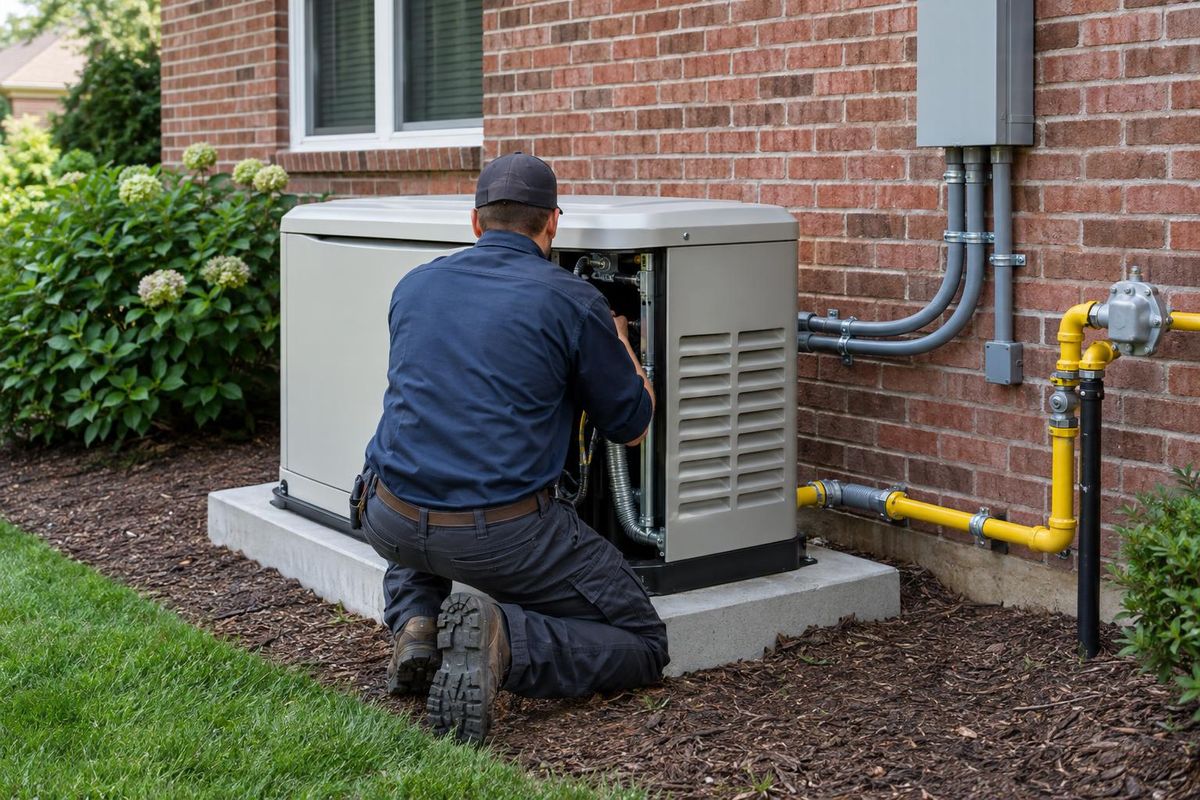
If you have a standby generator, listen for it to start and check the controller.
The first night
Keep refrigerator and freezer doors closed. Use flashlights rather than candles. Check on neighbors who may need help, especially older adults.
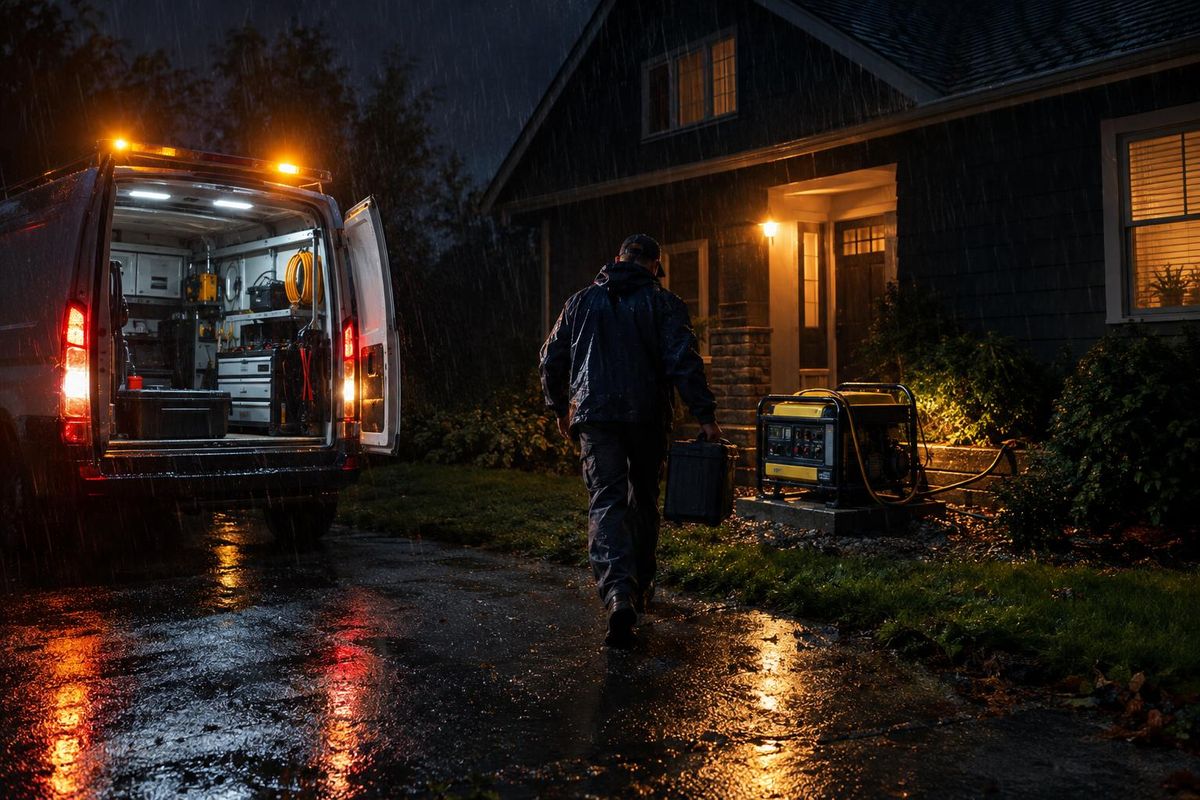
If you use a portable generator, set it up outdoors, connect it safely and plan refueling.
A multi-day outage
Plan for fuel, medication, water and a way to stay warm or cool. Portable and standby generators both need fuel and attention.
Rotate loads rather than running everything at once.
If the generator fails
Check the fuel, the battery and any fault code, then call or text for help. Tell the technician what the unit is doing.
Have the model and serial number handy.
Quick answers
How long can food last without power?
A closed refrigerator keeps food safe for about four hours and a full freezer about two days. A generator helps a lot.
Should I run the generator all night?
Run it safely outdoors, refuel only when it is off and cool, and keep carbon monoxide alarms working indoors.