Key takeaways
- Every appliance has a running load and some have a higher starting load.
- Air conditioners and pumps drive the size more than anything else.
- Load management can let a smaller generator do more.
- A load calculation beats a rule of thumb.
Running watts and starting watts
A running load is what an appliance draws while it operates. A starting load is the short surge a motor needs to get going. Air conditioners, refrigerators and pumps can need several times their running load for a moment.
A generator must be able to supply the largest surge while everything else is running.
Whole-home or critical loads
Whole-home backup covers nearly everything, including central air conditioning and electric ranges. Critical-load backup covers a chosen set of circuits.
The critical-load approach often allows a smaller generator and a simpler install.
Load management
A smart load module delays or sheds big loads so the generator never has to start them all at once. A single air conditioner can be run in turn with another.
It is a good way to stretch a modest unit.
Why the calculation matters
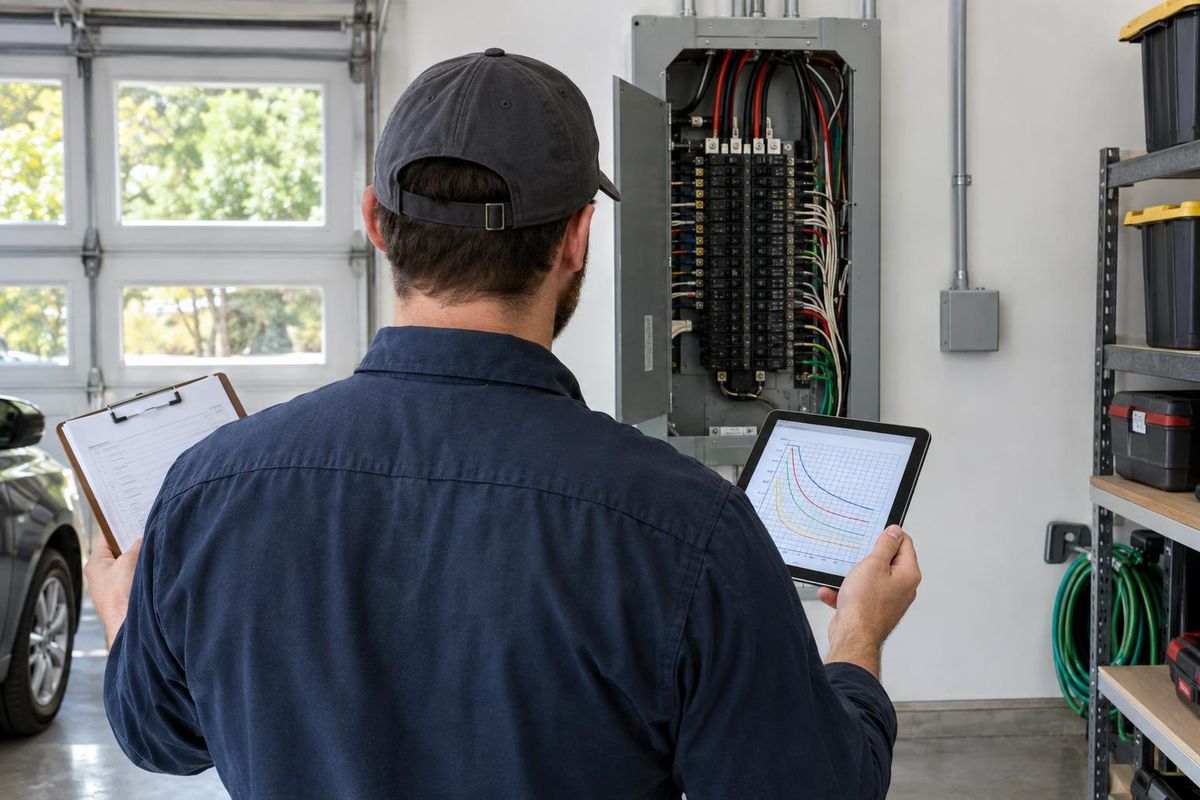
Guessing from square footage often gets the size wrong. A walk-through, a list of loads and a few numbers give a much better answer.
It is also a chance to spot ways to reduce the load.
Quick answers
Can I use a generator calculator online?
It can give a rough idea. A walk-through catches things a form cannot, like pump surges and panel limits.
Is bigger always better?
No. An oversized generator burns more fuel and takes more space. The goal is the right size.