Key takeaways
- Age and repair history matter most.
- A modest repair on a younger unit usually makes sense.
- Loads that have grown may mean the old size is too small.
- Reliability is the real goal.
Start with age
Many standby generators serve well for fifteen years or more with good care. Neglected units wear sooner. Maintenance records help a lot.
Ask how many hours the unit has run.
Look at the repair
A battery, a filter or a sensor on a younger unit is easy to justify. A major engine or controller failure on an older unit is a different question.
Ask for repair and replacement options side by side.
Check the loads
If you have added a bigger air conditioner, a pool, an addition or a workshop, the old generator may no longer cover you. A replacement can fix the size at the same time.
A load calculation answers it.
Think about reliability
A generator that only half works is worse than none, because you trust it. If you can no longer trust it, replacement may be the better path.
Planned replacements are calmer than emergency ones.
Quick answers
Is a ten-year-old generator worth repairing?
Often yes if the repair is modest and the unit has been maintained. We give you both options.
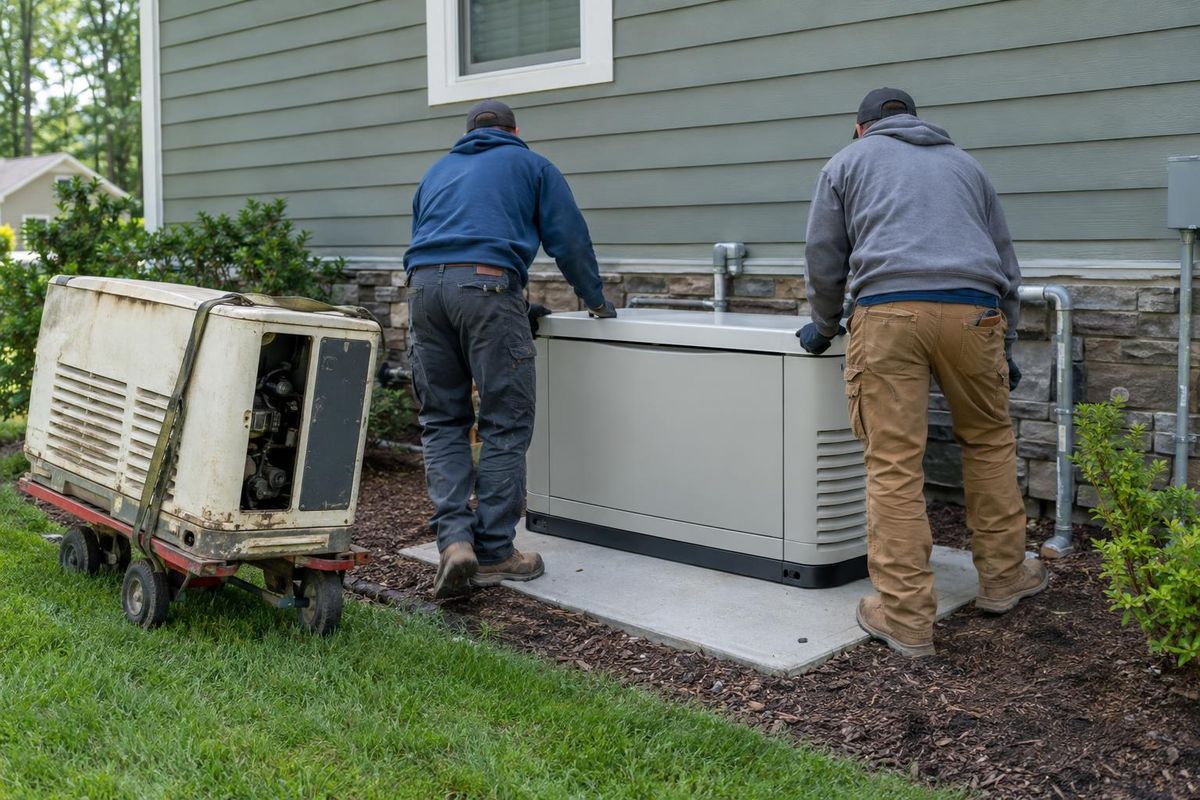
Can you reuse my existing pad and transfer switch?
Often yes after an inspection. We tell you what can stay.